Showing posts with label cooking. Show all posts

Deep-fat frying of foods

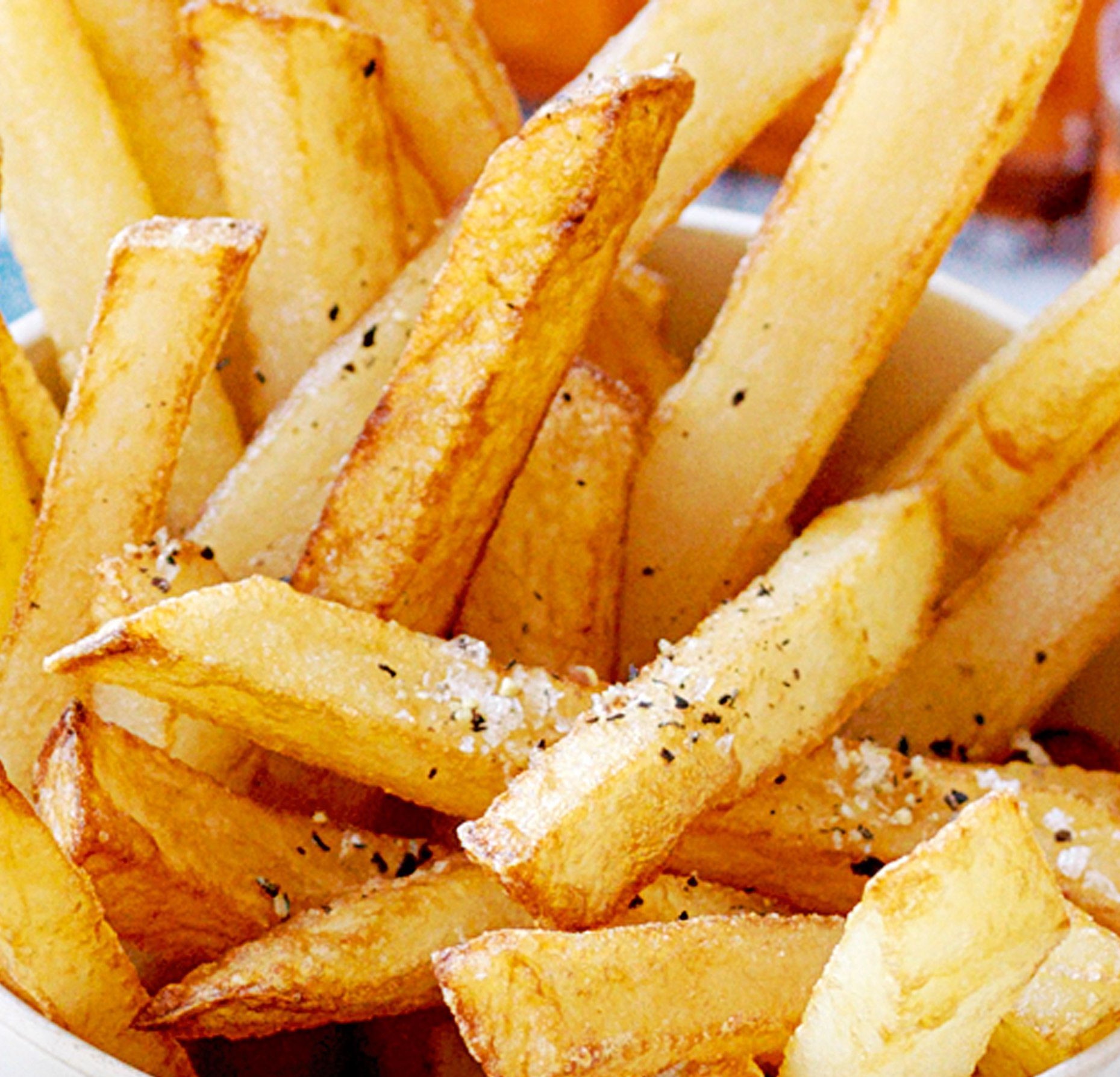
Deep fat frying is a cooking method that can be used to cook foods such as fried chicken, French fries, and potato chips. Fried foods have desirable flavor, color, and crispy texture, which make deep-fat fried foods very popular to consumers. Deep fat frying process involves submerging a food in extremely hot oil until a safe minimum internal temperature is attained.

It is a complex unit operation involving high temperatures, significant microstructural changes both to the surface and the body of the chip, and simultaneous heat and mass transfer resulting in flows in opposite directions of water vapor (bubbles) and oil at the surface of the piece.

The process is based on the oil-food interaction at high temperatures, which cooks and dehydrates the food, leading to physical and chemical changes, such as starch gelatinization, protein denaturation, flavoring, and color production via Maillard reaction.

Deep fried foods are hot and crispy on the outside and cooked safely in the center. The simultaneous heat and mass transfer of oil, food, and air during deep-fat frying produces the desirable and unique quality of fried foods.

Foods, such as chicken and fish, are coated with a breading or batter (cornmeal, flour, tempura) prior to being submerged in the hot oil. Once the coated food is submerged in the oil, the surface begins to dehydrate and undergoes Maillard reactions that break down sugars and proteins, creating the golden brown or brown exterior of the food.

Deep frying is very fast and, when performed properly, destroys bacteria. When water/moisture in food encounters very hot oil water vaporizes instantaneously turning into super-heated steam. It expands quickly and creates the crispy texture. Most of volatile compounds evaporate in the atmosphere with steam and the remaining volatile compounds in oil undergo further chemical reactions or are absorbed in fried foods.
Deep-fat frying of foods
Read more...

Process of food marination

Marinades are usually prepared with one or more acidic foods used to soften the food and allowing the flavors to be more easily absorbed. They are usually thin liquids; however, most utilize oil as a carrier of the flavorings into the food.

Marinating food adds flavor and does not have to add fat. Always marinate food in glass or ceramic dish in the refrigerator. Never place the food in a metal container.

Marinades may be used for as short a time as 30 minutes and as long as 2 to 3 days depending on the type of food and the recipe.

Fish should rarely be marinated for more than 30 to 45 minutes, especially if the marinade contains an acid component, such as wine, citrus juice or vinegar. Marinate too long will cause the fibers of the meat to break own, producing an unappealing, mushy texture.
Process of food marination

Read more...

Celsius temperature scale

Temperature is a measurement of how hot or cold something is. The Celsius temperature scale, formerly called the centigrade scale, was named for Anders Celsius (1701-1744), a Swedish astronomer. This is the scale that scientists use today.

Celsius assigned a value of 0 to the boiling point so water and 100 to the temperature of thawing ice. Instrument makers soon reversed the 0 and 100 to give us the modern freezing and boiling points of water as 0°C and 100 ° C, respectively.

Improperly cooked beef steaks and roasts are not as likely to cause disease as improperly cooked ground beef. Steaks and whole muscle cuts of beef must, however, be cooked to at least 63 °C internal temperature for 15 minutes to ensure destruction of the organisms on the outside of the meat as well as any internal pathogen.

Firmer fruits get their structure from pectin compounds; the skins and cores of apples are 10 - 20% pectin. For pectin to gelatinize jams and jellies, the recommended target temperature is 103 °C where the easily reached with sugary liquids.
Celsius temperature scale

Read more...

Chicken barbecue

Cooking meat or chicken slowly over hot coals, known as barbecuing, has been done in America since colonial days. It is characterized by a high-spirited competitiveness based on distinct regional preferences.

For example, in Oklahoma, barbecue refers to meat that has been slowly cooked over wood smoke at a low temperature.

The name ‘barbecue’ assigned to slow roasting over an outdoor fire, can likely be traced back to the West Indian term barbacoa, which is the word natives of Haiti used to describe the grill over which they roasted meat.

Chicken (Gallus gallus) is a very popular food, as it can be prepared a multitude of ways. Barbecued chicken is a perennial favorite, which is not surprising as it is easy to prepare and delicious.

Barbecue chicken needs to be seasoned early (giving the chicken time to absorb the spices) and cooked over a low flame for even browning.

When cooking chicken on a barbecue rack, always grease the rack well first. The collagen on the skin will turn into a sticky gelatin, which causes it to stick to the rack.

To really solve the problem, try baking the chicken for 15 to 20 minutes in a preheated oven, breast side up, allowing the gelatin time to infuse into the fat and meat or to be released into the pan.
Chicken barbecue


Read more...

Grilling of food

Grilling isn’t new cooking method; it’s been around for centuries. Grilling is cooking food over heat supplied by charcoal briquettes, lump charcoal, mesquite or logs, on a grid, flattop or skewer in a hibachi, brazier, gas or electric grill or any other grill.

Grilling is the ideal cooking technique for a wide array of items such as meats, poultry, fish, steaks, vegetables and even pizza.

The heat can be ‘direct’ - that is right under the food – or ‘indirect’ which means to one or more sides but nor squarely beneath the food to be cooked.

For most grilling, the ignited coals are spread in a single layer under the food. This is called direct grilling and represents the way most people grill.

The single layer of coals emits even, steady great whether the grill is open or covered. For more control, pile some of the coals at one side of the grill where they will emit intense heat.

Indirect grilling is the method of placing food on the grill rack away from or to the side of the heat source with the grill lid closed. This type of grilling cooks the food similar to roasting in an oven.

Try to avoid creating smoke. Smoke forms when fat drips onto the coals and can produce hazardous substances.
Grilling of food

Read more...

Cooking in oven

The oven should be tested to make sure food is cooked at the correct temperature. Use an oven thermometer and test the food with a probe to make sure it is thoroughly cooked.

Food items suitable for baking and oven cooking:
*Fruits: e.g. apples and pears
*Potatoes
*Milk puddings and egg custard products
*Flour products: e.g. cakes, sponges, pastries and yeast goods
*Vegetables prepared in vegetarian bakes
*Meat and vegetable hotpots which are oven cooked
*Eggs which are oven cooked

When food is cooked in an oven it is said to be baked. Baking is rather slow method of cooking, but it has the advantage that large quantities of food can be cooked evenly.

Sometimes the food to be cooked is put into oven in a container containing a little fat; food cooked in this way is said to be roasted. Meat and potatoes are the foods most often cooked by roasting.

Most ovens include at least one cooking rack as a standard accessory, plus a pan to catch drips from meat and other spills. All ovens have some type of filtering system to collect food particles and grease spatters so they don’t recirculate while food is cooking.
Cooking in oven

Read more...

The importance of cooking ingredient


Food ingredient is an ingredient in food recipe. The cooking can only be as good as the ingredients’ used.

While the recipe is a set of instruction for producing a certain dish, it is necessary to have a precise record of the ingredient, their amounts and the way in which they are combined and cook in order to duplicate a desired preparation.

In Wikipedia encyclopedia ingredient means something that forms part of a mixture. For example, in cooking, a recipe will specify which ingredients are used to prepare a specific dish.

The best chefs know this and spend as much time sourcing and choosing ingredients as they do cooking.

Great cooks and professional chefs have learned a few tricks along the way to make their food taste great. Some believes that salt is the key ingredient in cooking.

Many commercial products contain a secret ingredient that is purported to make them better than competing products. In the food industry, an active ingredient is that part of a formulation that yields the effect required by the customer.

Normally the recipe is not developed in a purely sequential manner. Much trial and error occurs as various combinations of ingredients, temperature and timings are tried. Chef will try out different proportions of ingredients and cooking times on multiple versions of the dish simultaneously.

To cook delicious, fresh man and nourishing food, chefs have to start with good ingredients – real ingredients. That doesn’t necessarily mean expensive ingredients – fancy techniques and equipment.

For best cooking results, need to use fresh ingredients whenever possible.
The importance of cooking ingredient

Read more...

Salt for cooking

Almost 80% of the sodium consumed comes from processed food. Salt has been used to preserve food since human started cooking.

Salt performs many culinary functions, and one of them, is to enhance the flavor of foods.

Different people have such widely different tolerances for salt in their food that no recipe can guarantee to please every palate.

Salt is harvested from sea and rocks. Sea salt is more expensive and can be found in many high, expensive grades, colors.

Sea salt is much preferred in cooking by professional chefs for its more delicate flavor. Harvested from evaporated seawater, it contains useful trace minerals, including some naturally occurring iodine.

Rock salt is literally minced from earth, from dried up sedimentary lakes and seas. It is refined to produce pure sodium chloride. Iodized slat is rock fortified with iodine and has noticeably metallic flavor.

Expanding the concept of salt to include seasonings such as miso, tamari, shoyu, umeboshi, and even olives and sauerkraut can give much more inventiveness to the cooking.

Most of these salt seasoning have extra power, not just seasoning power; because they have undergone a fermentation process, beneficial are part of their essence.

It should be used with great care. It assist in the color and finish pastry. If using salted butter or margarine, less salt is required.
Salt for cooking

Read more...

Starch Functions in Cooking

Starch is a complex carbohydrate which is insoluble in water; it is used by plants as a way to store excess glucose.

Starch are by far the most significant polysaccharide in the diet. They are are found in grains, legumes and other vegetables and some fruits in minute amounts.

Starch need to be cooked because raw starch tastes floury and is not easily digested. When starch and water are heated , the water passes through the walls of the starch granules and the granules become swollen and may burst.

This process is called gelatinization - a process in which starch, on heating , absorbs water and thickens liquids.

The major food sources of starch include grains in the form of cereal, pasta, crackers, bread and other baked goods.

Starch is used to produce food extenders and sugars syrups such as maltodextrins, glucose, dextrose, fructose, maltose and hydrogenated derivatives.

Many cooks use starch for such diverse properties as thickening gravies and soups, making a sweet pudding or dusting pastry before cooking.

For dough in breadmaking starch can be used to offset the excessive toughness caused by a strong flavour.

When added t batters for cakes, starch increases the tenderness and softness of the finished goods.

In cookies, it can help to form a tender structure, can sometimes reduce stickiness and oiliness and can bind water to give soft varieties.
Starch Functions in Cooking

Read more...

The Most Popular Articles

RSS Food Processing

Hypertension and Diet

Processing of Food

Food Science and Human Nutrition

  © Blogger templates Newspaper by Ourblogtemplates.com 2008

Back to TOP